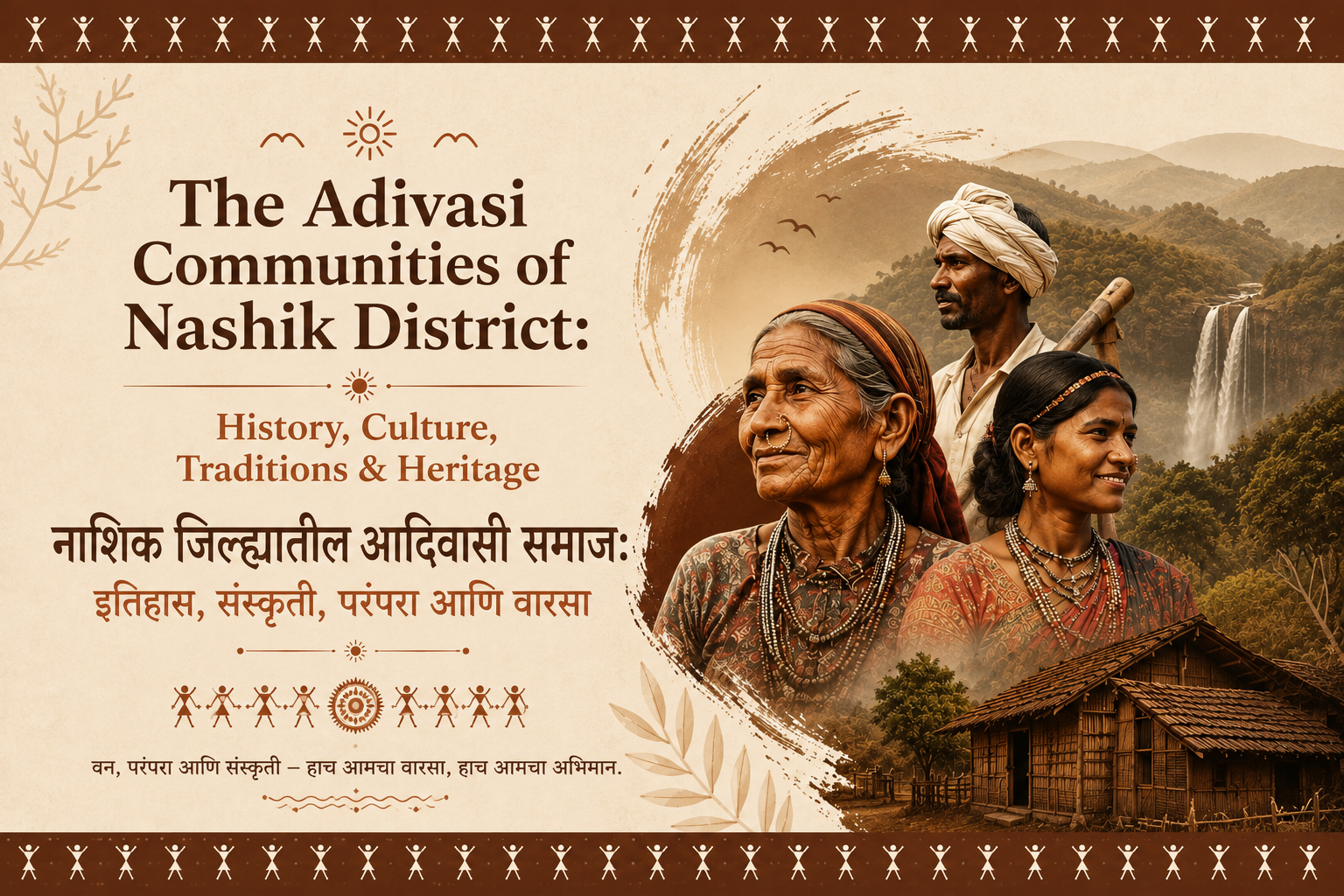
The Adivasi Communities of Nashik District: History, Culture, Traditions & Heritage
Aug 1, 2026
Introduction
Nashik District, located in the northwestern part of Maharashtra, is widely known for its vineyards, ancient temples, and scenic landscapes. Beyond these well-known attractions lies another invaluable treasure—the rich cultural heritage of its Adivasi communities.
The word "Adivasi" means "original inhabitants" or "first settlers." These indigenous communities have lived in the forests, hills, and valleys of Nashik for generations, preserving traditions, languages, and knowledge that have been passed down through centuries.
Today, the tribal population of Nashik plays an important role in the district's social, cultural, and economic development while continuing to protect their unique identity and heritage.
Geography and Tribal Regions
The western and northern parts of Nashik District are dominated by the Sahyadri (Western Ghats), creating an ideal environment for tribal settlements.
New stories, art and recipes from Adivasi life — delivered gently, once a month. No noise.
Peth
Trimbakeshwar
Kalwan
Dindori
Igatpuri
Baglan (parts)
Peint
These regions are characterized by forests, hills, rivers, waterfalls, and fertile valleys that have supported tribal communities for centuries.
Major Adivasi Communities of Nashik
Nashik is home to several indigenous communities, each with its own traditions, customs, language, and cultural practices.
Kokna (Kokni)
The Kokna community is among the largest tribal groups in Nashik District. Traditionally engaged in agriculture and forest-based livelihoods, the Kokna people maintain a close relationship with nature.
They are known for:
Traditional farming
Folk dances
Community festivals
Rich oral traditions
Beautiful bamboo craftsmanship
Bhil
The Bhils are one of India's oldest indigenous communities.
Historically recognized for their exceptional knowledge of forests, hunting skills, and archery, today's Bhil communities primarily depend on:
Agriculture
Animal husbandry
Forest produce
Daily wage employment
Small-scale farming
The Bhils have preserved many traditional customs despite modernization.
Mahadev Koli
The Mahadev Koli community has a significant presence in Nashik's hilly regions.
Their traditional occupations include:
Farming
Livestock rearing
Forest-based livelihoods
Community cooperation, respect for nature, and strong family values remain central to their way of life.
Thakar
The Thakar community has lived across Maharashtra's hilly regions for generations.
They are known for:
Traditional craftsmanship
Agriculture
Folk music
Cultural storytelling
Many Thakar families continue to preserve their traditional customs while embracing education and modern opportunities.
Katkari
Although smaller in number within Nashik District compared to neighboring regions, Katkari families contribute to the district's cultural diversity through their traditional knowledge and forest-based lifestyle.
History of the Adivasi Communities
Archaeological and historical evidence suggests that indigenous communities have lived in the Western Ghats long before the formation of modern kingdoms.
For centuries, tribal communities lived independently, relying on forests, rivers, and seasonal agriculture. Their villages developed unique systems of self-governance, resource sharing, and environmental conservation.
Even during different historical periods—including the rule of local kingdoms, the Maratha Empire, and British colonial administration—many tribal communities continued to preserve their customs and cultural identity.
Today, their heritage remains an important part of Maharashtra's history.
Languages Spoken
The linguistic diversity of Nashik's Adivasi communities reflects their rich cultural heritage.
Commonly spoken languages include:
Kokni
Bhili
Marathi
Local tribal dialects
Many families speak both their native tribal language and Marathi, helping preserve cultural identity while participating in broader society.
Traditional Lifestyle
Life in tribal villages has always been closely connected to nature.
Traditional homes are generally constructed using locally available materials such as:
Bamboo
Wood
Mud
Stone
Clay tiles
Grass thatching
These homes remain naturally cool during summer and warm during winter, making them environmentally sustainable.
Daily life often revolves around farming, collecting forest produce, caring for livestock, and participating in community activities.
Agriculture and Livelihood
Agriculture remains the backbone of tribal life in Nashik.
Major crops include:
Finger Millet (Nagli)
Rice
Vari (Little Millet)
Maize
Tur
Vegetables
Forest resources continue to provide:
Honey
Medicinal plants
Bamboo
Wild fruits
Firewood
Seasonal vegetables
Many families also participate in government-supported agricultural and livelihood programs.
Traditional Food
The cuisine of Nashik's Adivasi communities is simple, nutritious, and closely linked to seasonal farming.
Popular foods include:
Nagli Bhakri
Rice Bhakri
Vari preparations
Bamboo shoots (seasonal)
Forest mushrooms
Wild leafy vegetables
Traditional pulses
Fresh river fish (where available)
Natural ingredients remain an important part of everyday meals.
Festivals and Celebrations
Festivals are celebrated with enthusiasm and strengthen community bonds.
Common celebrations include:
Holi
Diwali
Harvest festivals
Village deity festivals
Traditional fairs
Community gatherings
Music, dance, and shared meals play an important role during these occasions.
Folk Music and Dance
Music has always been central to Adivasi culture.
Traditional performances often feature:
Drums
Percussion instruments
Folk songs
Group dances
Ceremonial performances
These dances celebrate harvests, marriages, festivals, and important community events.
Traditional Clothing and Ornaments
Traditional attire reflects both cultural identity and local craftsmanship.
Men traditionally wear:
Cotton dhoti
Shirt
Turban (during ceremonies)
Women commonly wear:
Traditional sarees
Silver necklaces
Bangles
Nose rings
Anklets
Handmade ornaments
Traditional jewellery continues to hold cultural significance during festivals and weddings.
Art and Handicrafts
The tribal communities of Nashik possess rich artistic traditions.
Popular crafts include:
Bamboo products
Wooden utensils
Handmade baskets
Traditional paintings
Natural fiber products
These crafts represent generations of inherited knowledge.
Connection with Nature
Nature forms the foundation of Adivasi life.
Forests provide food, medicine, water, and livelihood while also holding deep spiritual significance.
Many communities practice sustainable use of natural resources and have long protected sacred groves, rivers, and hills through traditional customs.
This close relationship with the environment has helped preserve biodiversity across many tribal regions.
Education and Modern Development
Over recent decades, education has opened new opportunities for Adivasi youth.
Students from Nashik's tribal communities are increasingly pursuing careers in:
Education
Healthcare
Engineering
Government services
Entrepreneurship
Agriculture
Information Technology
Government schools, hostels, scholarships, and skill development programs continue to support educational advancement.
Challenges
Despite significant progress, many communities continue to face challenges such as:
Limited access to healthcare in remote areas
Seasonal employment
Infrastructure development
Educational accessibility
Preservation of indigenous languages
Climate-related impacts on agriculture
Community organizations and government initiatives are working to address these issues while respecting tribal identity.
Preserving Adivasi Heritage
Preserving indigenous heritage is essential for future generations.
Efforts include:
Promoting tribal languages
Supporting traditional arts
Documenting oral histories
Encouraging cultural festivals
Protecting forests and sacred sites
Preserving traditional knowledge
By safeguarding these traditions, communities ensure that their rich cultural legacy continues to thrive.
Conclusion
The Adivasi communities of Nashik District are an integral part of Maharashtra's cultural landscape. Their deep respect for nature, vibrant traditions, diverse languages, and strong community values have shaped the identity of the region for centuries.
As modernization continues, preserving this remarkable heritage becomes increasingly important. By learning about the history, customs, and contributions of Nashik's indigenous communities, we not only celebrate their legacy but also promote greater understanding, respect, and cultural appreciation.
The story of Nashik's Adivasi communities is one of resilience, harmony with nature, and enduring cultural pride—a heritage that deserves to be preserved and shared with future generations.